From Data to Design: How Business Infographic Templates Clarify Your Message
In today’s fast-paced business environment, clarity is power. Whether you’re pitching to investors, training new staff, or explaining a complex process to clients, the ability to distill information into an easily digestible format is invaluable. This is where the strategic use of business infographic templates comes into play. An infographic transforms numbers, steps, and concepts into a visual story, making your message not only understood but remembered.
For many, the idea of creating a professional infographic seems daunting—reserved for graphic designers with expensive software. However, modern editable vector templates have democratized this powerful tool. Packages like the popular “4 Steps Business Infographic Template” provide a ready-made structure, allowing anyone to produce polished, effective visual content quickly. This article explores the purpose, significance, and practical application of these templates, explaining from the ground up how they fit into modern business communication and why they are a smart investment for clarity and engagement.
The Core Purpose: Why Visual Templates Matter
An infographic’s primary purpose is simplification through synthesis. It takes scattered data or a multi-step process and synthesizes it into a single, coherent visual narrative. The human brain processes visuals 60,000 times faster than text, and well-designed graphics can improve comprehension and retention significantly. A business infographic template serves as the blueprint for this synthesis. It provides a proven layout—like the classic four-step numbered progression—so you don’t have to invent the design architecture from scratch. Instead, you focus on your content, trusting the template to guide the viewer’s eye logically through your information.
Their significance lies in bridging the gap between having important information and having that information actually absorbed and acted upon. In a world saturated with reports, emails, and lengthy documents, a standout infographic cuts through the noise. For the creator, it saves immense time and resources. Learning advanced design software can take months; using an editable template takes minutes. This practical relevance extends across sectors: from marketing teams creating campaign breakdowns, to HR departments onboarding employees, to startups outlining their value proposition on a single page.
Decoding the Template Package: What You Actually Get
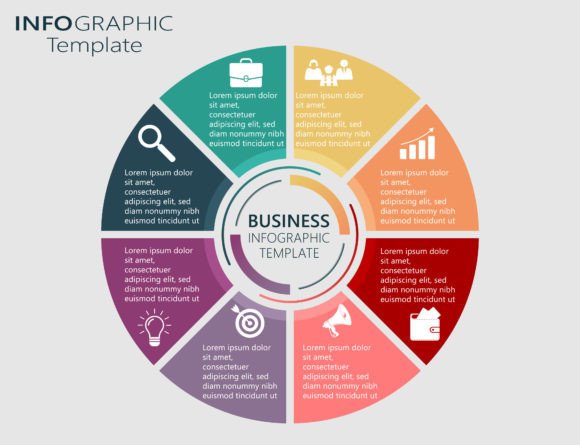
When you acquire a professional infographic template package, such as one based on the “Modern Business Infographic Template,” understanding the components ensures you can use it effectively. A typical package includes:
- 1 AI File: This is an Adobe Illustrator native file. It’s the primary source for advanced editing, allowing complete control over every vector shape, color, and layer. It’s ideal for professional designers or those wanting to make deep customizations.
- 1 EPS File: The EPS (Encapsulated PostScript) file is a versatile vector format. It can be imported into a wide range of software, from Illustrator to CorelDRAW to even some presentation tools. It ensures your design is scalable without losing quality, perfect for both digital and print use.
- 1 Preview JPEG File: This is a standard image preview. It allows you to quickly view the template’s final look without opening specialized software, and it can be useful for sharing initial concepts with team members.
These technical files are empowered by key user-focused features:
- Editable Text: All text placeholders can be changed to your specific headlines, descriptions, and labels.
- Editable Vector: Every graphic element—the icons, shapes, connectors, and backgrounds—is made from vector paths. You can change their colors, resize them, or even modify their shapes without pixelation.
- Free Fonts Used: The template typically uses fonts that are freely available for commercial use (like from Google Fonts). This means you don’t need to purchase expensive font licenses to match the design exactly.
A common misunderstanding is that such templates are rigid and produce generic-looking outputs. In reality, the editable vector nature makes them highly flexible. You can alter color schemes to match your brand, swap icons, and rearrange elements if needed, all while maintaining the professional layout’s underlying integrity.
The Four-Step Framework: A Logical Powerhouse for Communication
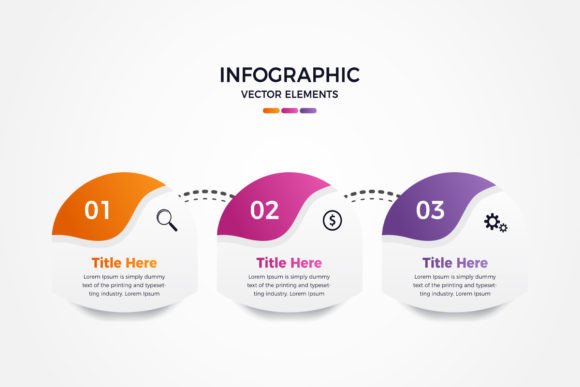
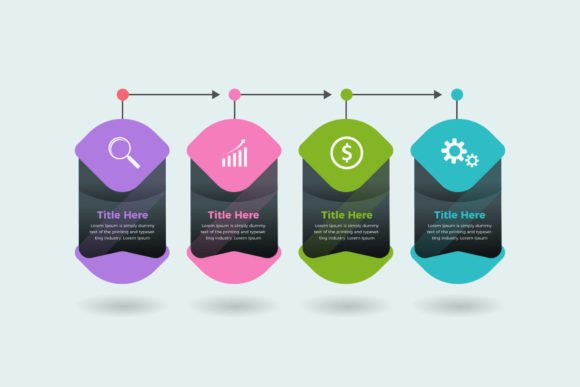
The “4 Steps Business Infographic Template” is a specific and powerful example of design meeting function. The number four holds a cognitive sweet spot; it’s enough to detail a process without overwhelming the viewer. This framework is incredibly versatile.
Let’s explore how this four-numbered step design can be applied across different business needs:
- Product Development Cycle: Step 1: Ideation & Research. Step 2: Prototyping & Design. Step 3: Testing & Feedback. Step 4: Launch & Distribution. This visualizes a timeline everyone in the company can follow.
- Client Onboarding Process: Step 1: Initial Consultation. Step 2: Contract & Agreement. Step 3: Implementation Setup. Step 4: Training & Support. This clarifies the journey for new clients, reducing anxiety and setting clear expectations.
- Marketing Campaign Rollout: Step 1: Audience Analysis. Step 2: Content Creation. Step 3: Multi-Channel Deployment. Step 4: Analytics & Optimization. It turns a complex campaign into an at-a-glance strategy map.
- Internal Problem-Solving Protocol: Step 1: Identify the Issue. Step 2: Analyze Root Causes. Step 3: Develop Solution Options. Step 4: Implement & Review. This can standardize team responses to challenges.
By using this template, you are not just listing steps; you are visualizing a progression. Arrows, icons, and progressive coloring (often built into the design) subtly guide the viewer from start to finish, reinforcing the idea of a journey or growth. This helps readers, from beginners to seasoned professionals, build a broader understanding of any sequential subject.
Fitting into Modern Digital Life and Work
Infographic templates have become integral to modern digital workflows. Their role extends beyond static prints. Here’s how they fit seamlessly into today’s activities:
- Website & Blog Content: An infographic embedded in a blog post increases shareability and dwell time, boosting SEO through engaging content.
- Social Media Marketing: A crisp, four-step infographic is perfect for LinkedIn, Facebook, or Instagram posts, conveying substance in a format suited for scrolling.
- Presentation Slides: Individual steps from the template can be extracted to create a cohesive, professional slide deck.
- Internal Knowledge Bases: They serve as quick-reference guides within company wikis or training portals, replacing cumbersome text documents.
- Email Newsletters: A simplified infographic can summarize a quarterly report or new policy, increasing readership within emails.
The practical relevance is clear: these templates are a multi-purpose tool for communication. They align perfectly with the principles of E-E-A-T (Experience, Expertise, Authoritativeness, Trustworthiness) in content creation. A well-researched, clearly presented infographic demonstrates expertise on a subject and builds trust with your audience by making their understanding easier. This is the heart of creating “helpful content.”
Choosing and Using a Template: A Practical Guide
To leverage a business infographic template effectively, follow a simple process that mirrors the clarity the template itself provides.
- Define Your Core Message: Before opening any file, ask: “What is the single key process or data set I need to convey?” Distill it into four key phases or points if using a four-step template.
- Gather Your Assets: Collect the text, statistics, and any logos or icons you want to include. Having everything ready streamlines the editing process.
- Customize with Brand Alignment: Open the AI or EPS file in your vector software (like Illustrator or a compatible free alternative). Adjust the primary colors to your brand palette. Edit all text placeholders. This is where the “editable text” feature shines.
- Refine and Export: Ensure the visual hierarchy is clear. Is the most important information the most prominent? Then export the final design in the formats you need—perhaps a high-resolution PDF for print, a PNG for web, and a JPEG for quick sharing.
A common assumption is that you need deep creative skills. While creativity helps, the template provides the creative infographic design structure for you. Your role is more editorial and strategic: choosing the right words, the right data, and the right brand elements to populate that structure. This makes it an accessible tool for educators, small business owners, managers, and content creators alike.
Beyond Business: Educational and Creative Applications
The application of these templates stretches far beyond corporate boardrooms. In education, a teacher can use a four-step template to outline a scientific method, a historical timeline, or a literary analysis process. The visual format aids student comprehension and serves as a reusable teaching aid.
For personal creativity and technology projects, an individual planning a complex home renovation, a wedding, or a personal learning roadmap can use the same template to organize their thoughts. It turns personal planning into a clear, actionable map.
Even in daily activities, the principle applies. Consider explaining a new recipe technique, a fitness routine, or a household budgeting method to family members. A simplified infographic, created in minutes from a template, can be more effective than a verbal explanation or a text-heavy note.
The SEO and Content Strategy Advantage
From an SEO perspective, infographics created from professional templates are powerful tools for capturing informational search intent. When someone searches “how does [a process] work?” or “steps to [an outcome],” your page containing a clear, visual answer is more likely to satisfy the user. This increases engagement metrics, which search engines value.
By using semantic keywords naturally within your accompanying article and the infographic’s text—terms like “business process visualization,” “editable vector template,” “step-by-step guide,” and “professional infographic design”—you align your content with what users and search engines are looking for. The infographic itself can also be shared and linked back to your site, building authority and driving traffic.
Ultimately, investing in a quality business infographic template package is not just about buying a design file. It’s about investing in a system for clearer communication. It empowers you to present complex ideas with simplicity, to engage audiences visually, and to produce consistent, brand-aligned content efficiently. Whether you are a startup founder, a marketing manager, a educator, or a communicator in any field, these templates provide the structure to turn your valuable information into impactful visual stories that inform, persuade, and inspire.