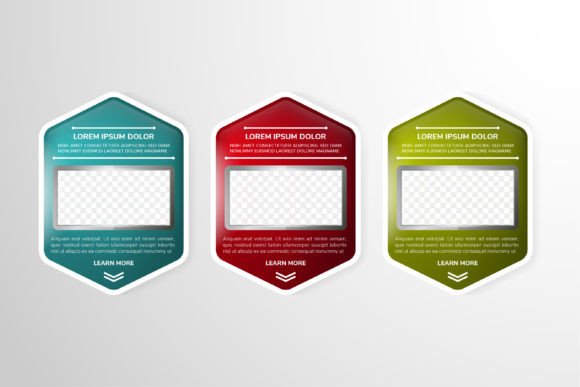
The Hexagon Template: A Modern Toolkit for Creative Communication
In the world of visual communication, clarity and structure are paramount. Whether you're presenting complex data, outlining a business strategy, or showcasing a creative portfolio, the way you organize information can make or break its impact. This is where specialized design templates come into play, acting as powerful frameworks to elevate your message. Among these, templates built around the hexagon web page element have emerged as a particularly effective and visually engaging tool. This article explores the purpose, significance, and practical application of these versatile resources, explaining how they fit into modern business, marketing, and creative workflows.
Beyond the Basic Shape: Understanding the Hexagon Infographic Template
At first glance, a template described as a "hexagon with photo placeholders with text content" might seem like a simple geometric arrangement. However, its true value lies in its function as a pre-structured visual system. The hexagon—a six-sided polygon—is inherently stable and interconnected, symbolizing unity and efficient design. In an infographic context, each hexagon acts as a discrete "window" or module. These windows can hold images, icons, statistics, or brief textual explanations, creating a map of information that is easy for the viewer to navigate.
The specific template in question is a "bright version with a simple color line," indicating a clean, modern aesthetic designed for clarity rather than decorative complexity. The "infochart with pictures in hexagon windows" description confirms its primary role: to be an informational chart (infographic) where visual elements (photos) and data coexist harmoniously within the hexagonal cells. This structure helps break down complex subjects into digestible, interconnected pieces, making it ideal for educational content, process diagrams, or feature showcases.
The Significance of Quality and Flexibility in Digital Assets
When adopting a template for professional or serious creative use, its technical specifications are as crucial as its visual design. This template is highlighted as being in "high resolution 300dpi" and comprised of "100% vector" graphics. High resolution ensures that any exported image files (like the included JPG) are crisp and suitable for both digital and print media, from website banners to brochure inserts. The fact that all graphics are vector-based is perhaps even more significant. Vector graphics are defined by mathematical paths rather than pixels, meaning they can be scaled to any size—from a tiny icon to a massive billboard—without any loss of quality or sharpness.
Furthermore, the description "Editable text, shapes, and color" and "Well organized" speaks directly to usability. A template is not just a static picture; it's a starting point. This one is designed as a flexible kit within software like Adobe Illustrator (Ai). The well-organized layers allow users to easily change text fonts and content, modify the shapes (perhaps adjusting the hexagon's size or stroke), and alter the color scheme to match their brand identity—that simple color line can become blue, green, red, or any corporate color. This adaptability makes it a durable resource, usable for multiple projects across different departments.
Practical Relevance: Where This Template Fits in Modern Work
The included file formats—Ai, EPS, JPG, SVG—tell a story of cross-platform utility. The Ai and EPS files are for professional vector editing and high-end print design. The JPG provides a ready-to-use raster image for quick placements. The SVG file is essential for modern web development, as it allows for scalable, crisp graphics directly on websites. This multi-format approach means the same core template can seamlessly transition from a corporate report drafted in Illustrator to a digital banner on a marketing website.
Let's explore some concrete examples of its application:
- Business & Marketing: A company could use it to visually explain the six pillars of its new strategy, with each hexagon containing an icon and a short goal statement. It could serve as a diagram in a business plan or as an advertisement highlighting six key product features.
- Education & Training: An educator might create an infographic breaking down the six stages of a scientific process, with a photo placeholder in each hexagon showing an experiment at that stage. This makes complex information approachable and memorable.
- Technology & Web Design: The "web page element" aspect is key. Web designers can utilize the SVG format to integrate this hexagon info-chart directly into a website layout as an interactive element explaining services or a tech stack. The modular design is perfect for responsive web layouts.
- Creative Presentations: Instead of a bullet-point list, a creative professional could showcase six portfolio pieces or project phases using this template, making a presentation or mockup more dynamic and visually coherent.
Clarifying Common Assumptions About Design Templates
A common misunderstanding is that using a template is uncreative or produces generic work. This is not the case. A professional template like this is analogous to a well-made frame for a painting. It provides a strong, reliable structure (the organized hexagon grid) upon which the user builds their unique content (their specific photos, text, and color choices). It saves countless hours on foundational layout and technical setup, freeing the creator to focus on the content itself—the messaging, data, and visual storytelling that matter most.
Another assumption is that such resources are only for expert designers. The emphasis on "editable text, shapes, and color" and the provision of common formats means that even individuals with moderate software skills can effectively customize it. The template acts as an educational tool in itself, guiding users towards better information design by demonstrating how to compartmentalize and connect ideas visually.
Building a Broader Understanding: The Hexagon as a Symbol of Connection
Ultimately, the choice of the hexagon shape is deeply symbolic and functional. In nature, hexagons appear in honeycombs—structures that are incredibly strong and efficient. In information design, they represent connection and network. Each cell is distinct yet inherently linked to its neighbors, perfectly illustrating concepts like interconnected systems, collaborative teams, or sequential processes. This makes the template far more than an aesthetic choice; it's a conceptual tool that subtly reinforces ideas of unity, stability, and intelligent design.
By providing a modern, clean, and vector-based framework, this type of template empowers users across fields—from marketing managers to web developers to educators—to produce high-quality visual communications quickly. It aligns perfectly with the needs of today's fast-paced digital environment, where compelling, scalable, and clear information graphics are essential for engagement.
Conclusion: A Versatile Asset for Clear Communication
The hexagon web page element and description vector infographic template represents a fusion of thoughtful design and practical utility. It is a creative, corporate, and technological asset that facilitates better communication. Its high-quality vector construction ensures professional results, while its editable nature invites customization and creativity. Whether used to simplify a complex concept, chart business data, design a website element, or enhance a presentation, it serves as a versatile toolkit for making information not just visible, but truly understandable. In choosing such a resource, users are investing not in a single graphic, but in a reusable system for making their ideas resonate with clarity and impact.