The Essential Guide to Using Car Vector Blueprints Correctly
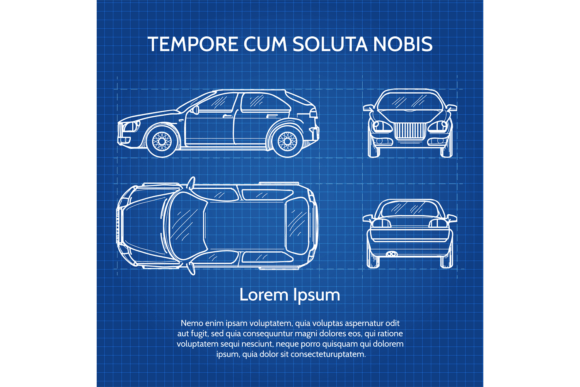
If you've ever searched for a visual representation of a vehicle, you've likely come across the term "Car Vector Blueprint." This isn't just a simple image or a sketch; it's a specific and powerful digital asset. A Car Vector Blueprint is a scalable graphic file, typically in EPS or AI format, that uses mathematical points, lines, and curves to create a precise, technical drawing of a car. Unlike a standard JPG, which is a static pixel-based image, a vector blueprint can be resized to any dimension—from a tiny icon to a massive billboard—without any loss of quality or sharpness. This makes it an indispensable tool for a surprisingly wide range of people.
The Hidden Value Beyond the Blueprint Image
Many beginners see a Car Vector Blueprint as merely a cool picture to download. Professionals, creators, and marketers, however, understand its true utility. These files are foundational for design projects, marketing materials, technical presentations, educational content, and even hobbyist model creation. The crisp lines and editable nature allow you to integrate the vehicle into logos, infographics, websites, and printed brochures seamlessly. A common oversight is treating these blueprints as finished artwork. In reality, they are a raw, versatile component—a building block waiting to be customized, colored, layered, and adapted to your specific project needs.
Choosing the Wrong File Type: The First Critical Mistake
One of the most frequent and costly errors is confusing file formats. When you see an offering labeled "Car Vector Blueprint EPS, JPG," it's vital to understand the distinction. The JPG preview is just for quick viewing; it is not the usable asset. Downloading only the JPG means you get a low-resolution, non-editable image. You cannot change its color, separate its components, or scale it up professionally. This mistake immediately affects quality and efficiency. Your presentation slides will look blurry, your website graphics will lack crispness, and any print material will be unsuitable.
Practical advice: Always confirm you are downloading or purchasing the actual vector source file (EPS, AI, or SVG). Before finalizing a download or purchase, check the description for included formats. If a site only provides a JPG, it's not offering a true Car Vector Blueprint. A better approach is to use reputable stock asset sites or specialized vector marketplaces that explicitly list the included vector formats. Your first question should always be: "Is this file editable in Adobe Illustrator or similar vector software?"
Overlooking Licensing and Usage Rights
Another area where people, especially entrepreneurs and small business owners, stumble is licensing. Not all Car Vector Blueprints are free to use for commercial purposes. Some are free for personal use only, while others require an extended license for products, branding, or large-scale distribution. Using a blueprint without the proper license can lead to legal issues, project delays, and forced redesigns—a drain on both cost and satisfaction.
What should you check? Before applying any asset to a client project, company logo, or product for sale, scrutinize the license terms. Look for keywords like "Commercial Use," "Royalty-Free," or "Extended License." If terms are unclear, assume the asset is not suitable for commercial work and seek one with explicitly stated commercial rights. This due diligence protects your business and ensures your communication materials are built on a solid, legal foundation.
Misunderstanding Scalability and Editability
A related misunderstanding is the assumption that any "blueprint" image can be easily manipulated. True vector files are composed of distinct, editable paths. A poor-quality vector Car Vector Blueprint, however, might have all its lines merged into a single, unbreakable shape, or it might be a poorly traced imitation. This severely limits your ability to isolate parts of the car, like the wheels or body silhouette, for your design.
To avoid this, look for sample previews that show complex detail. Before committing, if possible, test a free sample from the provider to see if you can select individual elements in your design software. A realistic example: You want to use only the chassis outline as a watermark. With a proper vector file, you simply delete the interior detail paths. With a merged or raster (JPG) file, this task becomes impossible, forcing you to find another asset or spend hours recreating it manually.
The Pitfall of Ignoring Artistic Consistency and Style
Car Vector Blueprints come in various artistic styles: highly detailed technical schematics, clean minimalist outlines, or stylized retro drawings. A mistake is grabbing the first blueprint you find without considering how its style aligns with your overall project's aesthetic. A hyper-detailed engineering blueprint will clash with a playful, modern website design, just as a simplistic outline might undermine the authority of a technical manual.
Better approach: Define the visual tone of your project first. Then, search for a Car Vector Blueprint that complements it. Use semantic search terms like "minimalist car vector outline," "technical car diagram," or "classic car blueprint vector" to find assets that match your need. This attention to consistency elevates the quality of your final presentation and communicates your message more effectively.
Neglecting File Compatibility and Software Requirements
Freelancers and hobbyists sometimes download a vector file only to discover they can't open it. Not all design software supports all vector formats. While EPS is widely compatible, some newer files might be in SVG or specific AI versions. Assuming compatibility can halt your project.
Practical correction: Know your tools. If you use a free program like Inkscape or an online editor, ensure the file format you download (like SVG) is supported. If you use professional Adobe tools, EPS or AI files are typically safe. Always check the software requirements or format notes on the asset page. This simple check saves time and prevents the frustration of having a usable asset you cannot actually use.
Focusing Only on Famous Car Models
A natural tendency is to search for blueprints of iconic sports cars or latest models. However, for educators, bloggers, and marketers creating content about automotive history, mechanics, or broader themes, niche vehicles are often more relevant. The availability of vector blueprints for vintage cars, utility vehicles, trucks, or even concept cars is surprisingly good. Overlooking this diversity limits your content's uniqueness and specificity.
Expand your search. Instead of just "car vector," try terms like "1980s sedan blueprint vector," "SUV schematic vector," or "electric car concept vector." This helps you find assets that make your work stand out and serve your specific topic better, moving beyond generic visual choices.
The Final Check: Resolution and Print-Ready Details
For projects destined for physical printing—whether a brochure, banner, or product packaging—the internal resolution of the vector file is paramount. While vectors are inherently scalable, a blueprint created with very sparse detail points might look crude when enlarged to a massive size. It’s technically sharp but artistically simplistic.
Before making a final decision for a large-print project, examine the preview image at full zoom. Does the line work look smooth and continuous? Does it have the appropriate level of detail for your intended size? Downloading a low-detail vector for a billboard is a poor decision that becomes evident only at the costly printing stage. Investing in a high-quality, richly detailed Car Vector Blueprint from a professional source ensures satisfaction at every scale, from screen to super-wide print.
By understanding what a Car Vector Blueprint truly is, respecting its technical requirements, and making informed choices about format, license, style, and compatibility, you transform this asset from a simple download into a reliable, powerful component of your creative and professional work. It becomes a tool that enhances efficiency, elevates quality, and communicates your vision with precision and clarity.